

THE APPRENTICE YEARS (By David Cooke)
Below are the memories of David Cooke when he joined the Autowrappers
workforce as an apprentice, it is a great insight to the process of starting at
an engineering company in Norwich during the late 70s
THE WHIFFLER ROAD APPRENTICE YEARS 1976 - 1980
The following is my personal recollection as recalled some 50 years later, apologies for any adverse inaccuracies.
Many engineers came to being thanks to the sterling efforts of Brian Woods excellent training school and we will be
forever grateful for his expertise patience and guidance.
Autowrapper’s Craft and Technician Engineering Training Apprenticeships were considered one of, if not, the best
in East Anglia. Having a contracted position within a thriving Engineering firm was excellent stability for young
school-leavers and places were very sought after.
The last year at school and I still hadn’t any real idea what I wanted to do. I remember the Careers department
coming and have us fill in a questionnaire to assist with this decision making. Two elements I distinctly remember
was 1, I didn’t want to work in a factory and 2. I didn’t want a office job. Well, I ended up doing both at AW for 43
years! I guess my head was well and truly in the clouds, wanted to fly but realised RAF wasn’t that desperate and I
had to face reality. Dad persuaded me to get an apprenticeship under my belt if only to have something to fall back
on, and so it was.
My School was Costessey Secondary Modern. We had a good Metalwork class run by Ernie Parsons. I enjoyed
the things we made and I seemed to have a certain flare with metal, unlike wood, horrible material.
Every year a certain person would visit the local schools searching for possible Apprentice candidates. He would
come and inspect a sample of our efforts and discuss the work with Mr Parsons. That person was of course the
legendary Brian Woods. Well, my Wrought Iron Coffee Table wasn’t particularly outstanding, very similar to several
others in fact, neither was the copper trinket box. What apparently caught Brian’s eye was a Crib Board I made, he
was apparently impressed with the accuracy of my drilling. As a result, I was shortlisted for an interview and
entrant’s exam.
By the time the interview came I had already applied for jobs at British Telecom and Eastern Electricity and failed
miserably thanks to my appalling maths skills so wasn’t very confident. Anyway, I had a good interview with Brian
and a certain Peter Marlee and made the grade for Craft Apprentice, bordering Technician.
Whilst waiting for the result I was offered a Job at Frost Engineering firm who, at the time, made, amongst other
things, submarine drive shafts! I accepted the position but then cancelled within the week receiving an offer from
AW.
I commenced along with the following other nervous entrants in the long hot summer of 1976. It seemed
excessively long for us of course because we had become used to shorter school days and the long summer
break. With me on this intake were;
Mick Newal, John Rhodes, Adrian Harrold, Graham Smith, Robert Larter, Billy Gibson, Robert Woof
Stephen Nichols, Philip Dix and Tony Cannal-Smith.
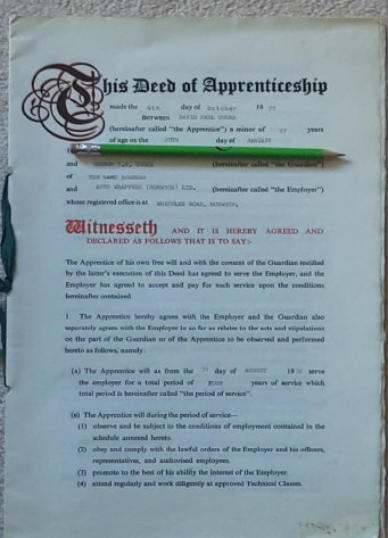
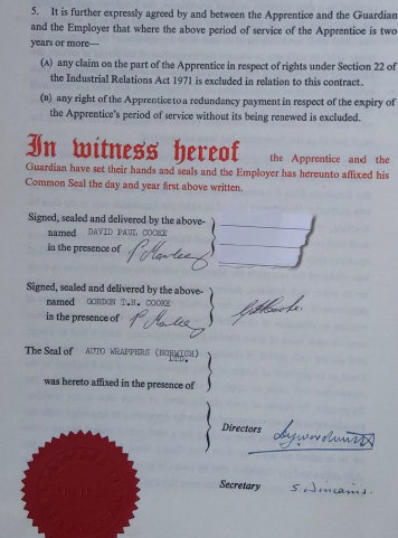

AW had been taking on Apprentices for many years and subsequently had a home-grown skill set to retain the
production capacity. Employment after the 4-year Apprenticeship was getting rarer as each year passed. We were
all very much aware of this however the training was so well respected locally we knew we ought to find
employment fairly easily assuming we completed the course.
The Induction period included safety briefs including some fairly graphic accidents whilst working the machinery. I
always hated the Horizontal Milling Machine for this very reason. The school was physically split into two having
work benches down one side for the first-year entrants and the other side for the 2nd, 3rd and 4th year people.
Once into the third-year, apprentices were cast into the wider factory for on-going training and work experience
including shop floor, Drawing Office and Planning Dept.
All the machines within the Training School were small in comparison with the ones on the shop floor but the
operation of course very similar. At this period in time, we had the complication of everything being a mixture of
Imperial and Metric so adding to the challenge. All of these machines were significantly better condition than those
we came across at Norwich City College where we did day release for the City and Guilds Certificate.
The first year was challenging to say the least. Probably designed so to test ability and staying power of the group.
The very first “test” was a bench work piece comprising of straight forward cutting and filing but to a very high
degree of accuracy. We had to cut out a shape and then cut out a mating part that fitted exactly within the first with
no light shining round the edges when you held it up to the light. It was this first task that we got to appreciate what
we were up against and the ability of our other class members. It was frustrating to watch some complete these
tasks with ease and move along onto the next exercise. It certainly tested our “metal” and helped fill the scrap bin.
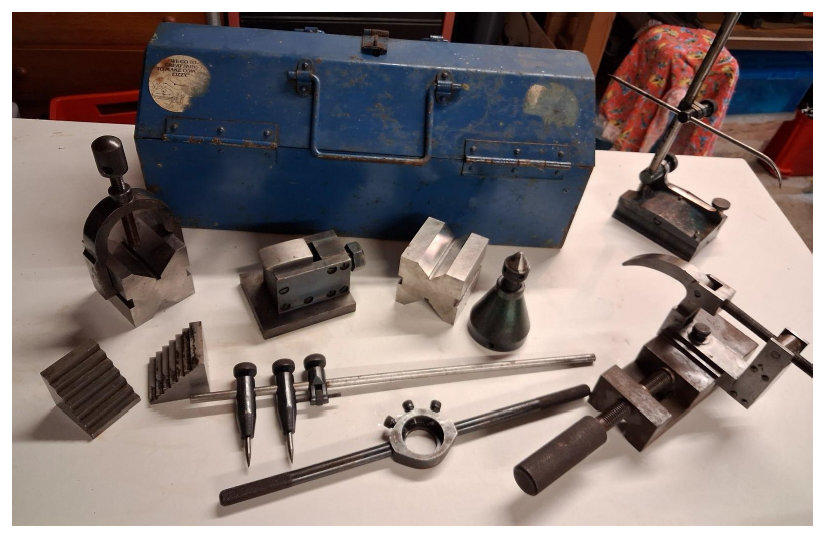
We made a lot of our tools including height gauge, hacksaw handle, centre punch, tee nuts, vee blocks, drill
gauges, pin punches, odd leg callipers, dividers etc and of course a tool box to keep them in.
The tools we made were supplemented and, in some cases, replaced via a in house “Tool Club” where we could
purchase tools via a weekly deducted amount from our pay packet. We were also invited to join in the works
pension scheme, wow how far away did that seem. I did however appreciate that the more you could accumulate
the better pension you could have. Think there was also a sick club so what with all that and the dreaded Tax and
National Insurance deductions, when the pay packet arrived in real physically counted and bagged pounds and
pennies, there wasn’t much left.
In those early years we had to purchase our own brown work coats and take them home for washing. I can still
remember the smell of the milky white machine coolant. Later we were issued with nicer blue company supplied
coats which were washed, repaired and replaced as required by the company.
Initially we kept ourselves to ourselves but gradually integrated with the wider world of the factory as a whole.
There were certain tasks assigned to Apprentices like loading and un-loading the de-burring machine or rumbler as
it was affectionately known. Dirty smelly fiddly task one I somehow managed to escape from. On the other hand, a
nicer job was going around everyone making a list of their dinner requirements on the “Dinner list”. The Canteen
was very basic and in those days there were segregated areas for the office staff.
Everyone had an employee number and a clocking card. You had to clock in and out each time you arrived and
departed. There was a two-minute allowance before you would get pay deducted if you were late. Consequently,
there would always be a mad dash in the mornings sprinting across the car park determined not to be late. Same
being repeated if you left the premises at lunchtime.
The “adult workforce” was very much Union orientated with very few non-members. As contracted Apprentices we
were excluded from this option.
Brian Wood was the chief Training School Instructor and over saw all the Apprentices throughout the training. He
was the “hands on” instructor specifically for the first year and then there was another Instructor, John More who
over saw the following years module training. I never got to know John as he left before my second year
commenced.
Brian was very much into his motor bikes. Old motor bikes. Whatever he couldn’t fix he made in the training school,
either that or he got us to make it for him. Well rank has its privileges. Woe beside anyone caught making their own
unauthorised “home rule” bits of which there were of course many.
Brian was a very much likeable character and helped the challenging first year pass without any of us getting
removed. Just as we were going to start the second year, John More left and was replaced by Mel Tuddenham
who also became one of the lads joining in the football club and organising the boat race building.
The workpieces and modules we followed over the four years became more and more difficult. Indeed, many test
pieces were more complex and had tighter tolerances than actual production parts. Making these and achieving
the fine tolerances readied us for the wider world of proper Production Engineering. Of the most challenging I
found was not so much the accuracy but getting it done within the time allocated. Most crucial within production of
course for keeping the costs within budget.
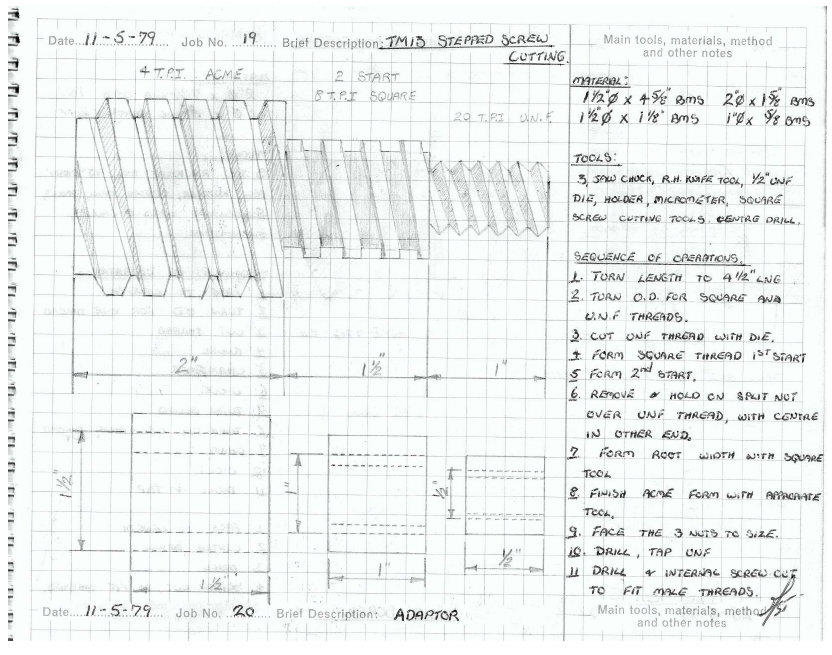
Each week we would be allocated time to proceed to the canteen and do our “write ups” Basically a Log Book
recording all the various modules we had completed, marked and recorded by Mel and then scrutinised by an
Engineering Industry Training Board Invigilator on a regular basis to ensure we were following and maintaining the
national standard.
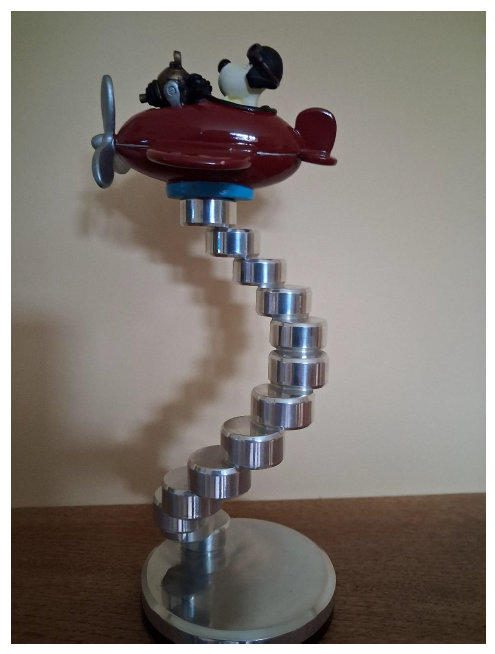
Following photos show example components, test pieces and an extract from the Log Book.
Tools and test pieces have lasted the test of time. Well, they didn’t exactly get used very much after my
apprenticeship! I joined the Staff and several years later achieved my ultimate goal in gaining my Private Pilots
Licence.
Renovation of the Gurney Clock with its Lion and ball race track mechanism took place during my training but
something I didn’t actually work on.
I soon palled up with Pickles, Stephen Nichols and Dixy, Philip Dix. They had also been to school together. We
would spend our lunch break together. It was an hour break giving some of the locals’ time to bike home and back.
We would often bring our packed lunch and eat from our modest cars in the car park or drooling over the latest
Ford Car that Derek Lince had bought. I remember the RS, XRs with extreme envy. Occasionally we would dash
down to the chip shop on the roundabout at the bottom of Drayton Road. In the latter years on a Friday, we would
drive round the ring road to the Park House Pub on Catton Grove Road where we would indulge in a pint, a
“steakwich” meal and a few games of Space Invaders. Must admit despite some very scary drives back we would
occasionally miss the 2-minute cut off point.
In the third and fourth years we would be seconded within a production department for “on the job” experience
making actual components for the wrapping machines. This work could be included within our Log Books. I was
focused in the Turning and Fitting areas so had spells working on a Centre Lathe and also the Detail Section.
The Centre Lathe experience introduced me to the mild hierarchy of unwritten rules. Some of the times for jobs
were “tight” and others ““loose”” woe beside if you undercut the accepted time. Every job you had to log on a time
sheet given time started and time finished. The first off had to be inspected and signed off by an Inspector. Then
the whole batch was inspected and signed off. Any rejects had to be re-done via replacement paperwork and a
black mark against your name and record. Rejects were recorded with “Pink tickets” so you didn’t want to
accumulate many of those. I particularly remember Stanley the old Inspector, smoked a pipe, very precise in his
work and a lovely gentleman.
Within the turning section at the time I remember were, Micky Hunt, His father Albert, Kelly Groom, Paul Brooks,
Mick Wyatt, with Harry Enifer and Ivan Mortimer working the Capstans. Micky Hunt, after leaving, set up a turning
business of his own and actually offered me a job so I couldn’t have been too bad.
Sprockets were a favourite, I recall Paul Brooks being named “Sprocket Man”.
The Detail section was fun under the leadership of Lesley Webb and his colleagues, Jack Nixon, Dudley Harrison,
Reggie Crick and Authur Rowley. Younger members of the team then included Wayne Rotellor John Ramsbottom
and Nigel Woods. There used to be someone on lookout duty watching for Stephen Pope to appear whilst games
of dice took place. George Moon was the welder at that time.
Obviously witnessed many wind ups during the time as an apprentice, many posted elsewhere within this group.
Many we weren’t familiar with at the time but just witnessed some of the cheering that went out over the shop floor
following Althea’s announcements.
Other memorable event was a Static Line Parachuting trip. I joined Andrew Lovewell (Frothy), Billy Gibson, Robert
Larter, Peter Tomalin, and Philip Dix on a weekend trip to Peterborough Sibson Airfield for parachute jumping! Well,
Billy and Robert were a couple of jack the lads, persuaded Frothy to stop off in Costessey at a pub to stock up on
bottles of beer, most drunk on route and sadly ejected out of the mini bus on the way up. We were accommodated
in a dormitory type room and well fed with a very nice canteen. Training was by some Ex-Red Devil Army guys.
Sadly, the weekend was marred with high winds and as a group we didn’t actually jump. Philip and I did return on a
couple of occasions and managed three jumps each from 2500 feet. Only regret is not taking on charity
sponsorship.
On reflection It was generally a happy place to work in and had a family atmosphere. Many a good friend was
found here, fun and laughter whilst of course retaining the highest of engineering standards admired and
remembered by many.
Hoping this jogs some memories.
David Cooke..